
Case study films revealing the real-world impact of Google DeepMind's AI, told by the scientists using it. Shown at Google I/O 2026.
Client
Google DeepMind
What we did
The Brief
The Brief
Show the real-world impact of Google DeepMind's AI for Google I/O 2026, with two case study films following researchers using AI to transform global health.
Our Approach
Our Approach
We told this story through people - the most emotive way to show AI impact. Filming documentary style in Africa and the UK, we followed two labs on two continents to reveal just how far Google DeepMind's AI is reaching.
Impact
Impact
These films became flagship assets for Google DeepMind's science story - earning a slot in the Google I/O 2026 keynote and streamed to 10M+ viewers, as well as earning 650K further views independently on YouTube.
Google I/O is Google's flagship event of the year - the stage where the company reveals its biggest breakthroughs.
Top of the list in 2026? Their AI work.
Of course, nowhere is that story more compelling than in healthcare. Keen to showcase this at I/O, Google DeepMind asked us to create two documentary-style case study films, following researchers around the world using Google AI to transform healthcare.

Uganda: Understanding cancer at a genetic level
In Kampala, we followed Dr. Daudi Jjingo, Director of the African Centre of Excellence in Bioinformatics and Data-Intensive Science at Makerere University. His team combines Google DeepMind tools, including AlphaFold and AlphaGenome, to uncover the biological drivers of cancers across Africa and explore new treatments, including vaccines.
The film puts Daudi's team at the centre: breakthroughs that were once out of reach, now happening in Kampala.
650,000
views
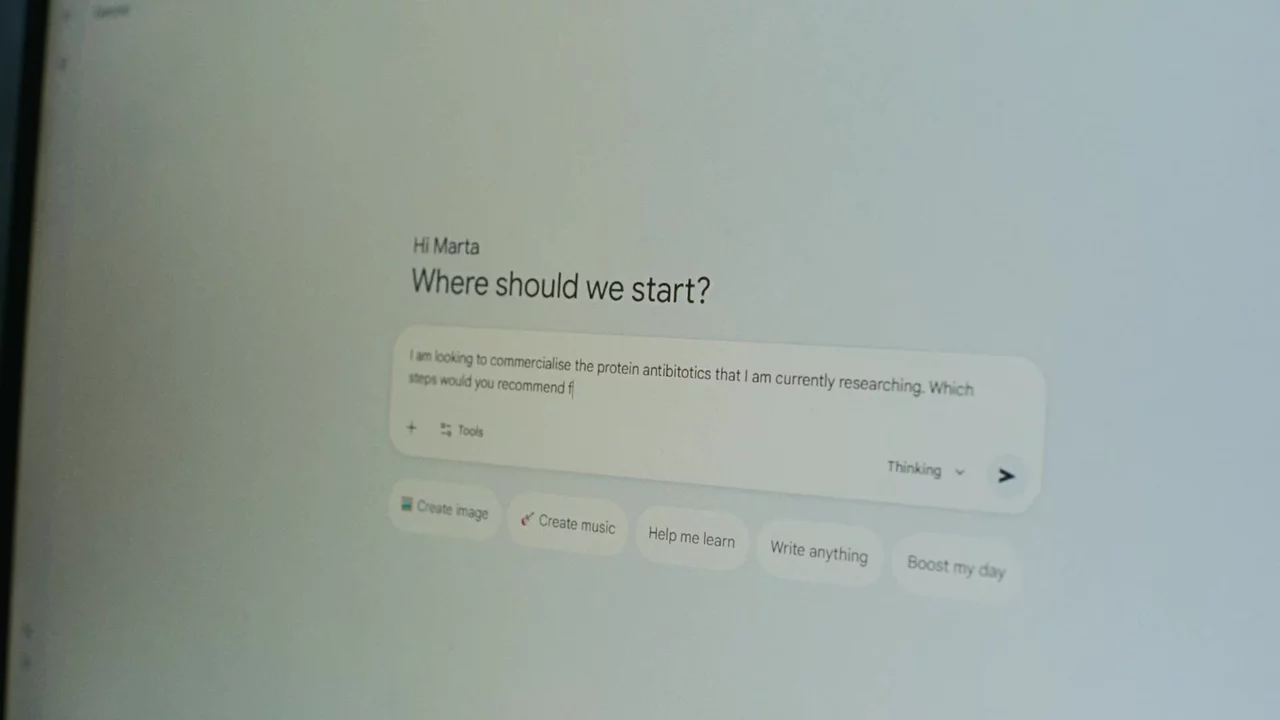
Cambridge: Using AI to outsmart drug-resistant bacteria
Antimicrobial resistance is a silent pandemic, already linked to millions of deaths every year. At the University of Cambridge's Department of Biochemistry, Ben Luisi's lab uses AlphaFold and Google's AI co-scientist to understand how bacteria resist drugs, and to explore treatment combinations that could stay a step ahead.


